
Home/Gut health, IBS & IBD
Gut health, IBS & IBD
Daily bloating is not normal. It's information.
Every test came back clear and you were told it's stress. Clear scans rule things out. They don't explain why you're uncomfortable every evening.
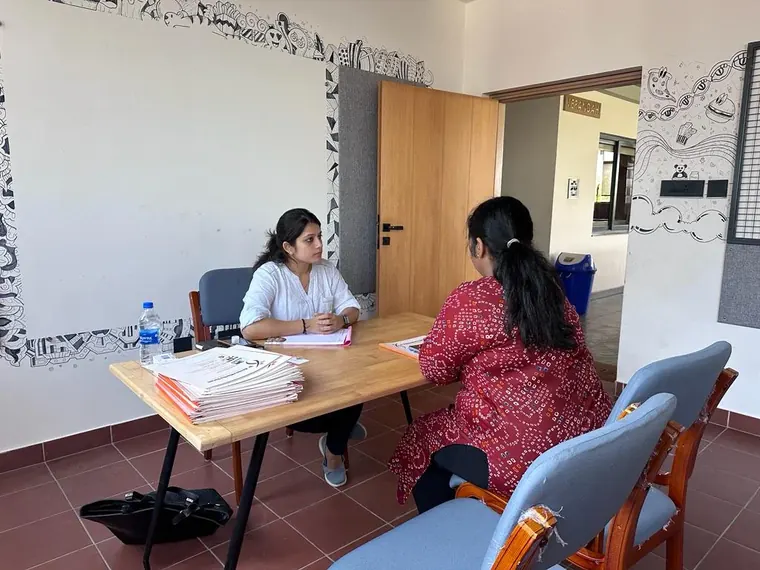
Does this sound like you?
Tick whichever ones you recognise.
- Bloated by evening regardless of what you ate
- You've quietly stopped eating things, and the list keeps growing
- Acidity or reflux that antacids only partly touch
- Alternating constipation and loose motions
- Every test is normal but you don't feel normal
- Diagnosed with IBS and given no plan beyond eat more fibre
- Crohn's or ulcerative colitis and no dietitian involved in your care
What's actually going on
Bloating is a symptom with several different causes.
The word bloating gets used for at least four separate problems. It can be bacterial overgrowth in the small intestine, genuine carbohydrate malabsorption, low stomach acid, or simply mechanical: eating too fast, not chewing, drinking large amounts of water mid-meal. They feel almost identical and they need completely different plans.
Low stomach acid is worth naming, because it's more common than high acid and produces near-identical symptoms. Plenty of people spend years on acid suppression for a problem that was the opposite of what was assumed.
With IBD it's different again. Crohn's and ulcerative colitis are immune-driven, and nutrition works around disease activity: what helps during a flare is not what helps during remission, and getting that backwards makes things worse.
The approach
What we'd actually do.
We work out which kind of bloating this is
Timing, triggers, stool pattern and how you eat, not just what. This narrows it down quickly and stops us guessing.
We stop the food list from growing
Long-term elimination shrinks your microbiome and makes you more reactive, not less. Where we restrict, it's structured, time-limited, and has a planned reintroduction.
We rebuild diversity deliberately
Fibre variety and fermented Indian foods, curd, kanji, idli, dhokla, introduced at a pace your gut can actually handle rather than all at once.
For IBD, we match the plan to disease activity
Flare and remission need different approaches. Low residue when inflamed, diversity when settled, with nutrient repletion throughout since absorption is often compromised.
The order that flattens the spike
- Half the plate, vegetables. Sabzi, salad, whatever is cooked that day. Eat this first.
- A quarter, protein. Dal, curd, paneer, egg, chicken or fish. Eat this second.
- A quarter, carbohydrate. Rice or roti. Still there. Just last.
Same food, same kitchen, different order. This alone measurably lowers the post-meal glucose rise, which is where most of the damage happens.
What to expect
What changes, and when.
Rough guide, not a promise. Bodies differ, and anyone giving you exact dates is guessing.
Relevant training
Inflammatory bowel disease training through Monash University, the institution behind the FODMAP research. Author of The Gut Code, available on Amazon.
Questions
What people ask me about this.
Should I just do a FODMAP elimination diet?
Only properly supervised and only for a limited period. Low FODMAP is a diagnostic tool, not a way of life, and staying on it long term reduces your microbial diversity. The reintroduction phase is the part that matters and it's the part most people skip.
Every test came back normal. Is it in my head?
No. Normal tests rule out structural disease, which is genuinely reassuring. Functional gut problems don't show up on a scan and are still very real and very treatable.
Can food fix Crohn's or colitis?
It can't replace your medication and I won't suggest it does. What good nutrition does is support remission, correct the deficiencies that come with poor absorption, and reduce how much a flare takes out of you.
Is probiotic supplementation worth it?
Sometimes, strain-specific and for a defined period. Fermented food is usually the better first move, and it's cheaper. I don't sell supplements or earn from any brand.
Why does everything bloat me now?
That usually points to reduced microbial diversity, often after years of narrowing your diet or a course of antibiotics. The fix is rebuilding tolerance gradually, not restricting further.
Let's work out what's going on.
Bring your reports. One consultation and a straight answer on what will and won't work.
Also treated
Other conditions.
PCOS & PCOD
Insulin resistance, irregular cycles, acne, facial hair and the weight gain that comes with them.
Read more →Thyroid
Hypothyroidism, Hashimoto's and the stubborn weight, fatigue and hair fall that follow.
Read more →Diabetes & pre-diabetes
Blood sugar control, HbA1c reduction and reversing pre-diabetes while it's still reversible.
Read more →